

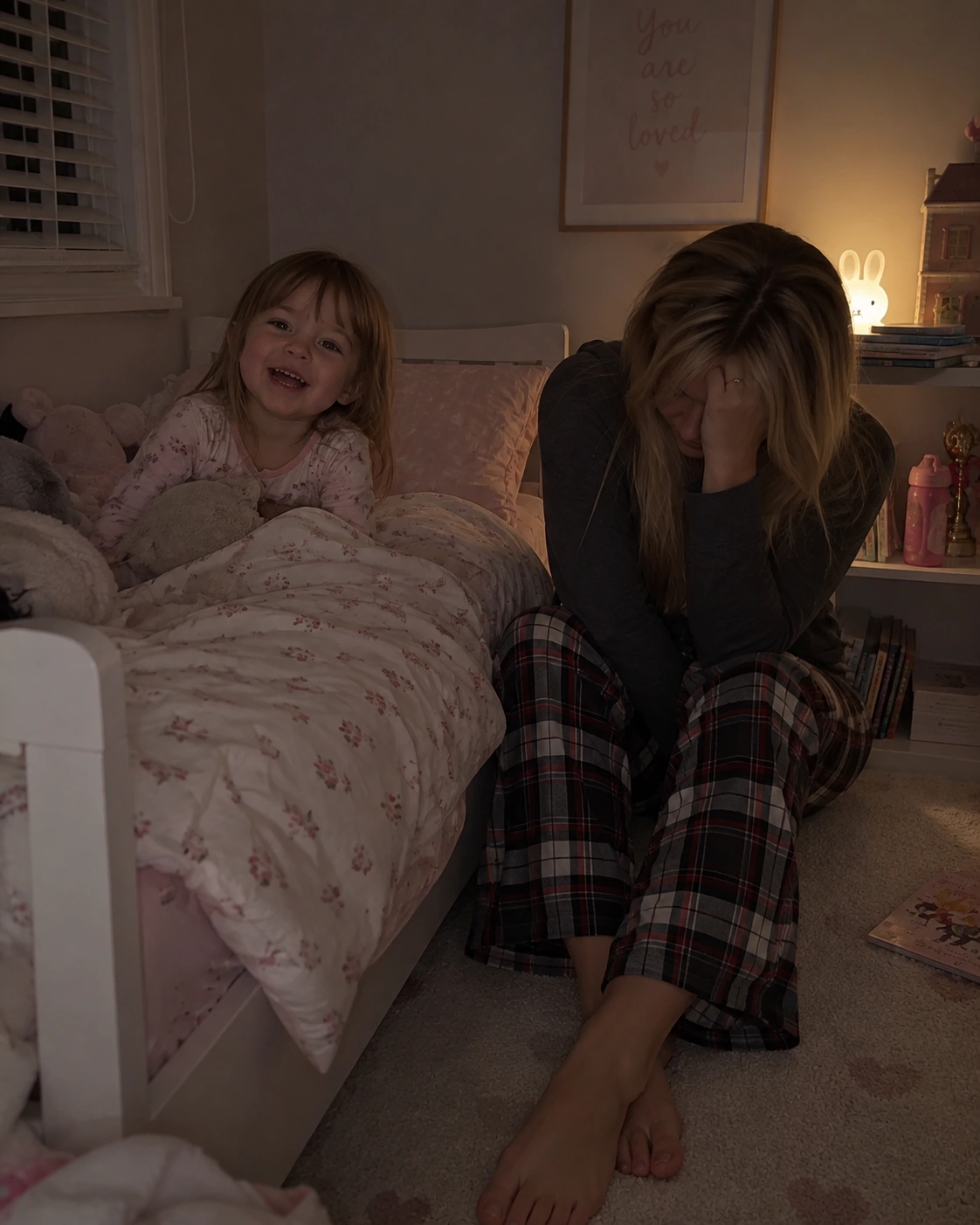
Night after night:
“Mom…”
“I can’t sleep.”
“I had a bad dream.”
Or they simply appear at your door again.
You get them settled.
Go back to bed.
Then again.
You start patient.
Eventually, you lose patience.
Maybe you snap.
Then you feel guilty for snapping.
So you try everything.
Earlier bedtime.
Less screen time.
More activity.
A better routine.
A darker room.
Being firmer.
Being gentler.
And somehow...
THEY STILL WAKE UP.
Almost everything you’ve tried happens at one of two points:
BEFORE THEY FALL ASLEEP.
Or...
AFTER THEY WAKE UP.
But what about the hours in between?
FALLING ASLEEP AND STAYING ASLEEP AREN’T THE SAME PROBLEM.
Once your child falls asleep, they don’t stay motionless until morning.
They move.
They roll.
They reposition.
And their body keeps interacting with the physical environment around them.
By the time you hear...
“Mom…”
...the wake-up has already happened.
So the question becomes:
WHAT WAS HAPPENING BEFORE THEY WOKE UP?
Their mattress.
Their bedding.
The temperature.
And something sitting directly underneath their head for hours:
Their pillow.
MOST OF US NEVER REALLY QUESTION IT.
Small?
Soft?
Flat?
Looks comfortable?
Done.
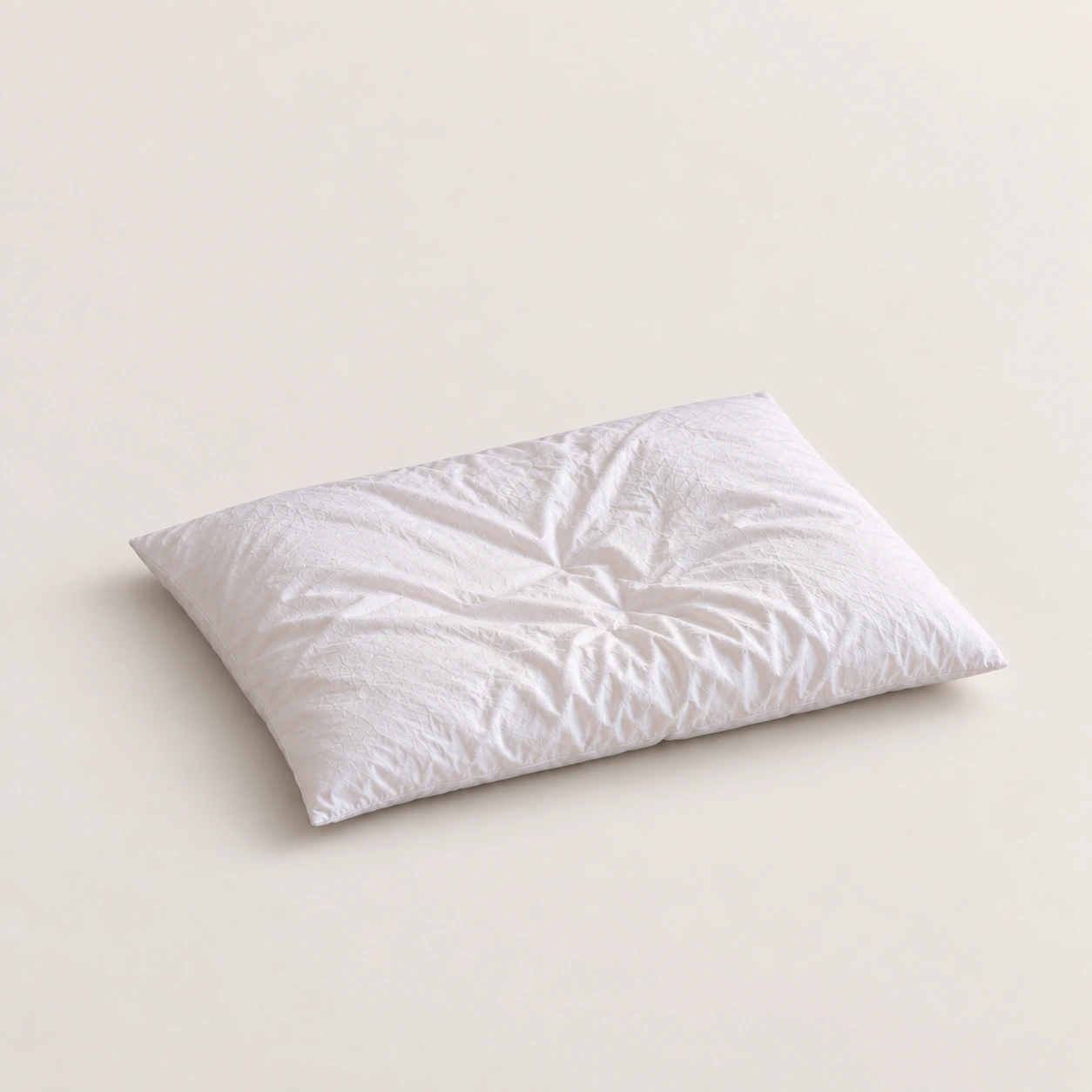
There may be nothing obviously wrong with it.
That’s exactly why nobody questions it.
But there’s a different question worth asking:
“HOW DOES THIS WORK UNDER MY CHILD WHILE THEY’RE ACTUALLY SLEEPING?”
Their head comes down.
Their weight presses into it.
Then they move.
And now look what happens:
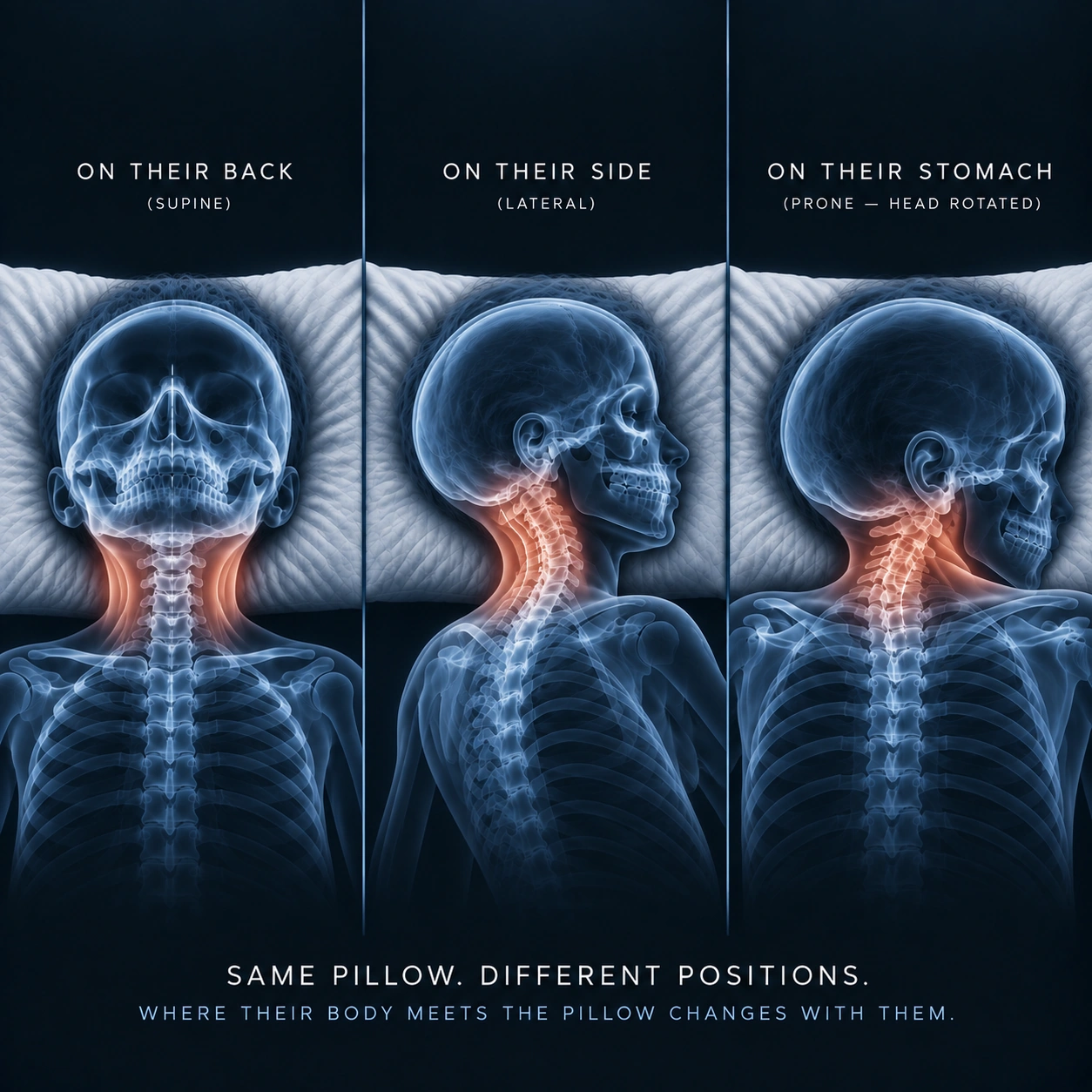
SAME PILLOW. DIFFERENT POSITIONS.
Where their body meets the pillow changes with them.
That matters because a pillow isn't something they use for five minutes while falling asleep.
THEY SLEEP ON IT FOR HOURS.
So if you're trying to remove things that could work against a comfortable night...
The thing underneath their head is a variable worth questioning.
SO WHAT WOULD WE DESIGN IF WE STARTED WITH THE CHILD?
Not with what a pillow is “supposed” to look like.
Not with the familiar rectangle.
With the child.
Their head.
Their neck.
Their smaller shoulders.
Their weight.
And the fact that they move.
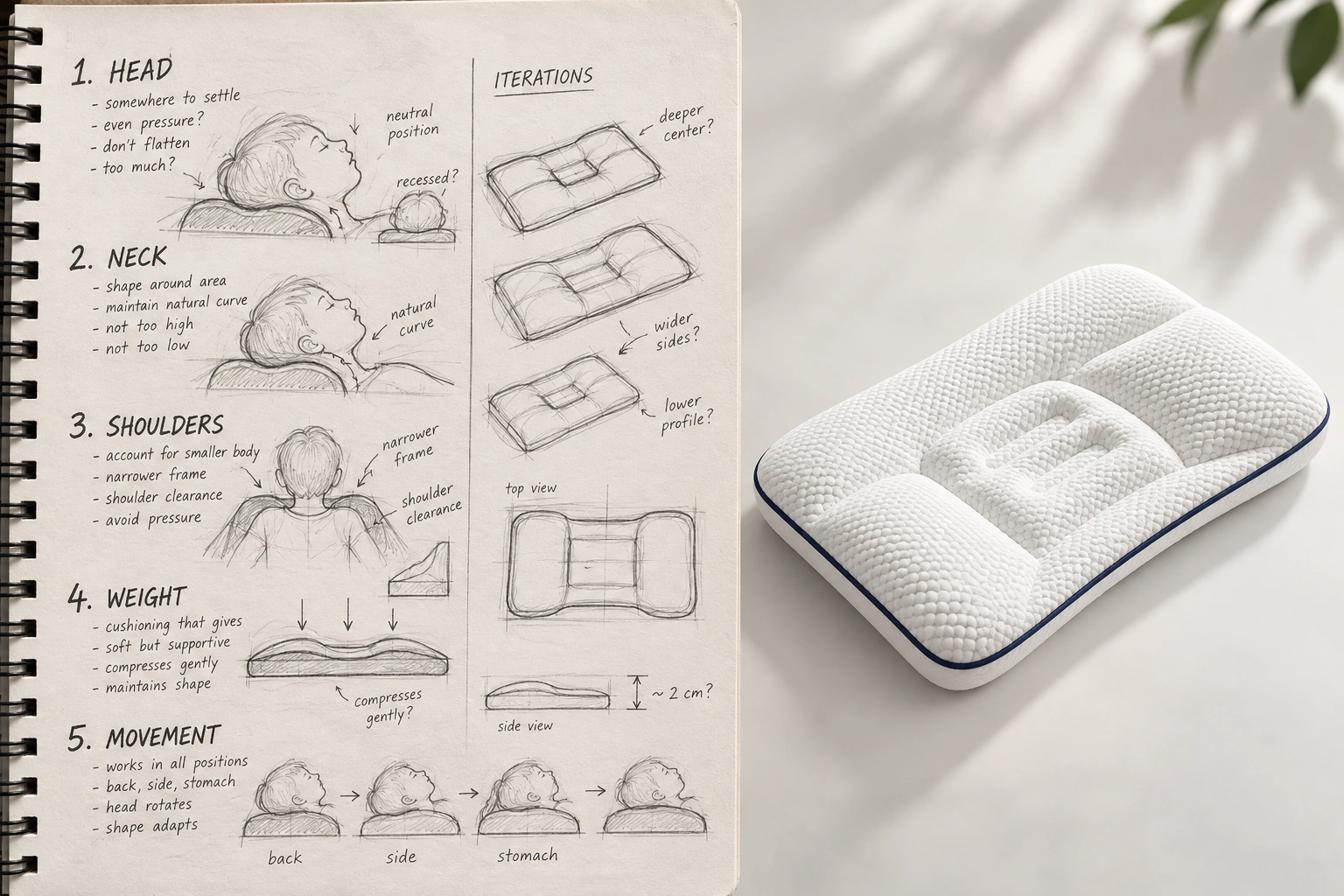
That question became UKOLA.
THE SHAPE CAME FROM THE CHILD.
NOT THE OTHER WAY AROUND.
The low profile.
The recessed center.
The surrounding contour.
The shaped sides.
The cushioning underneath it.
You don't need to understand the engineering behind every curve.
You only need to see the difference it creates:
ON IT.
VS. INTO IT.
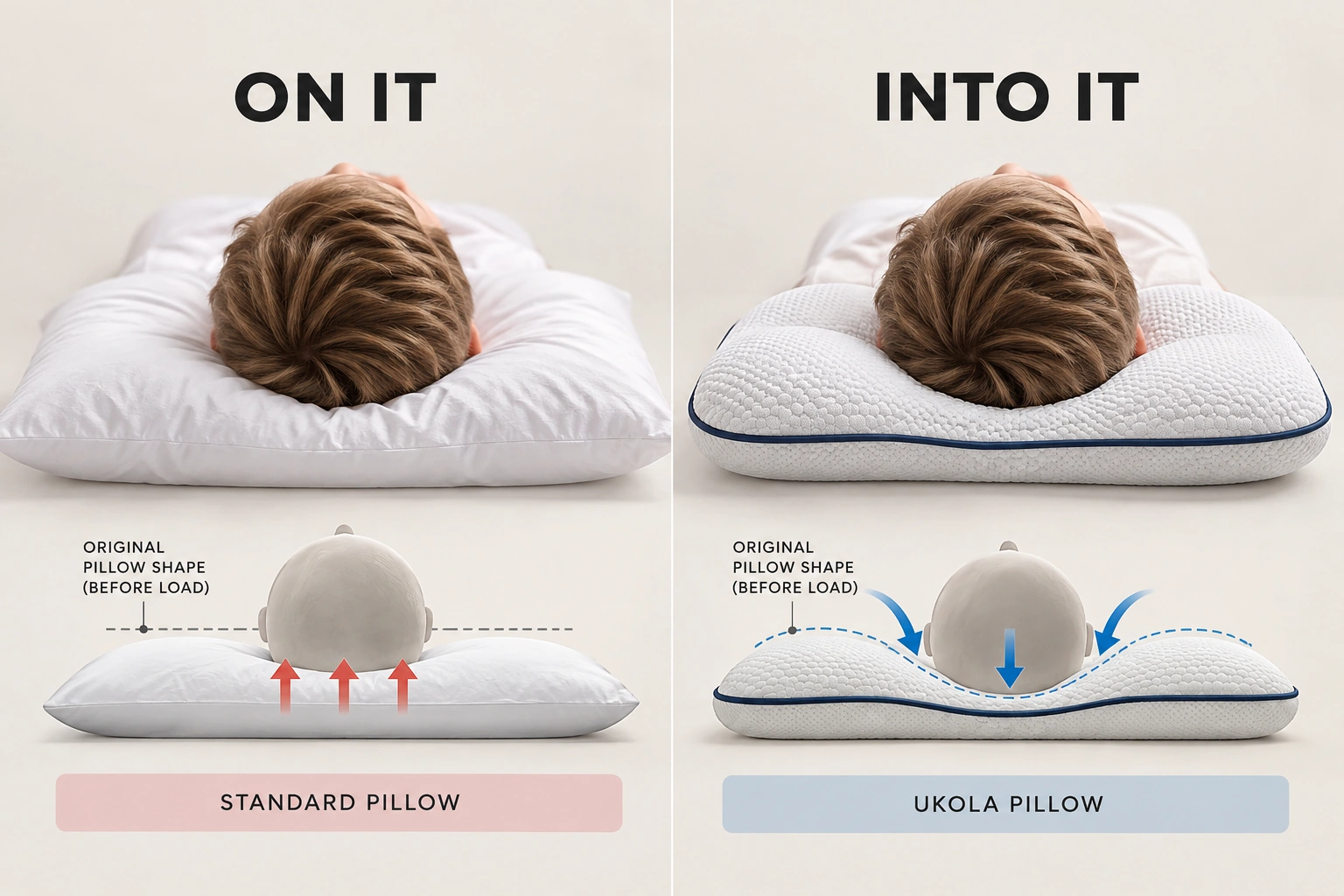
A conventional pillow gives their head a broad cushion to rest ON.
UKOLA gives their head a shaped place to settle INTO.
THE CUSHIONING GIVES.
THE SHAPE CRADLES.
That's the mechanism.
And because your child doesn't stay in one position...
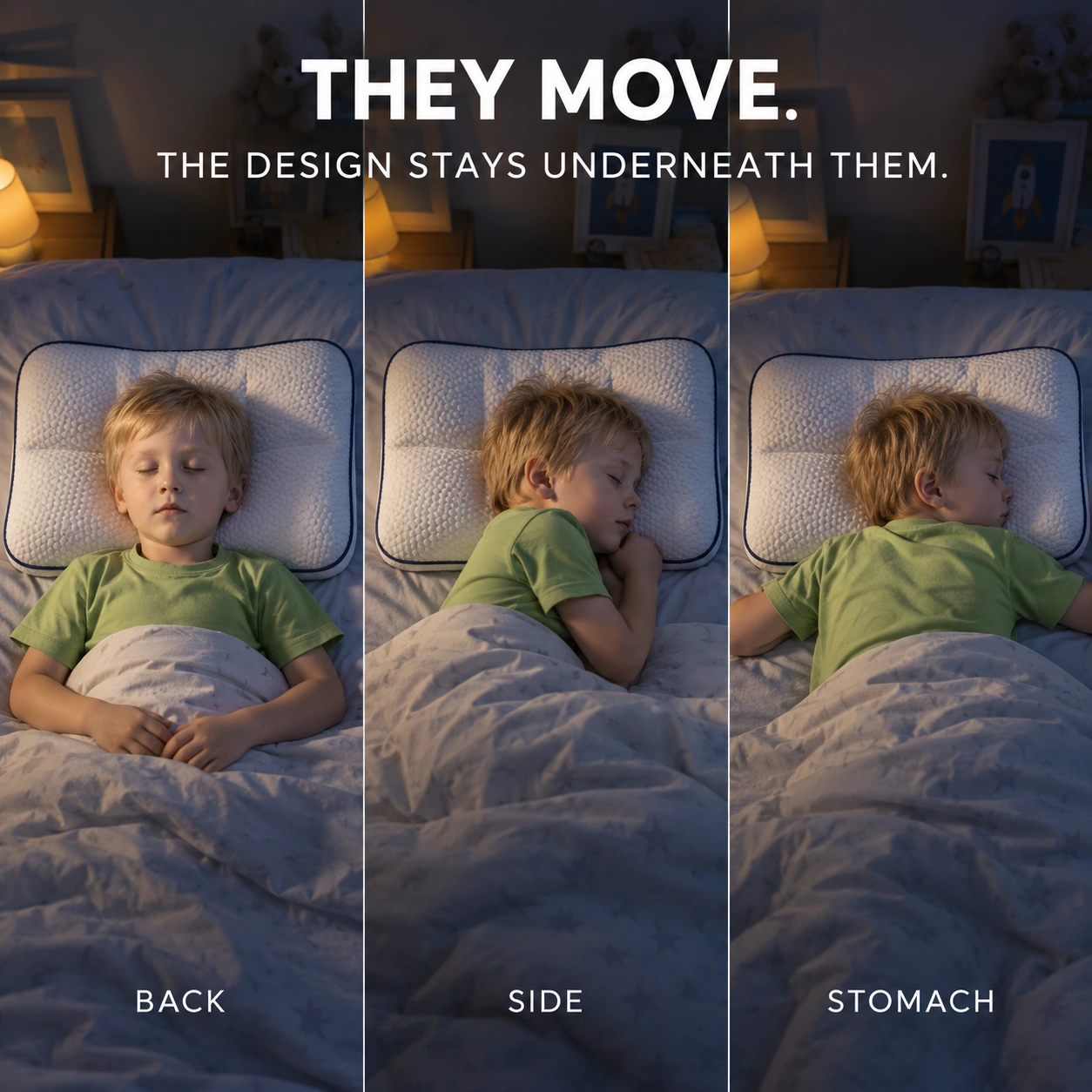
The design isn't only there when they first lie down.
It's still underneath them when they turn.
When they roll.
When they reposition.
When they settle again.
AND THIS IS WHY ANY OF THIS MATTERS.
You're not trying to make your child comfortable for the first five minutes of bedtime.
YOU WANT THEM COMFORTABLE THROUGH THE NIGHT.
You do the routine.
Tuck them in.
Turn off the light.
Close the door.
And then their physical sleep environment takes over for hours.
That is the part of the night UKOLA was designed around:
THE HOURS IN BETWEEN.
Before you either hear...
“Mom…”
Or you don't.
A PILLOW ISN’T THE ONLY REASON A CHILD WAKES.
UKOLA isn't a magic switch.
But if you're trying to remove the variables that could work against a comfortable night...
What sits underneath their head for hours is worth addressing.
ONE LESS PHYSICAL VARIABLE LEFT TO CHANCE.
Because the outcome you want was never really a “better pillow.”
It’s this:
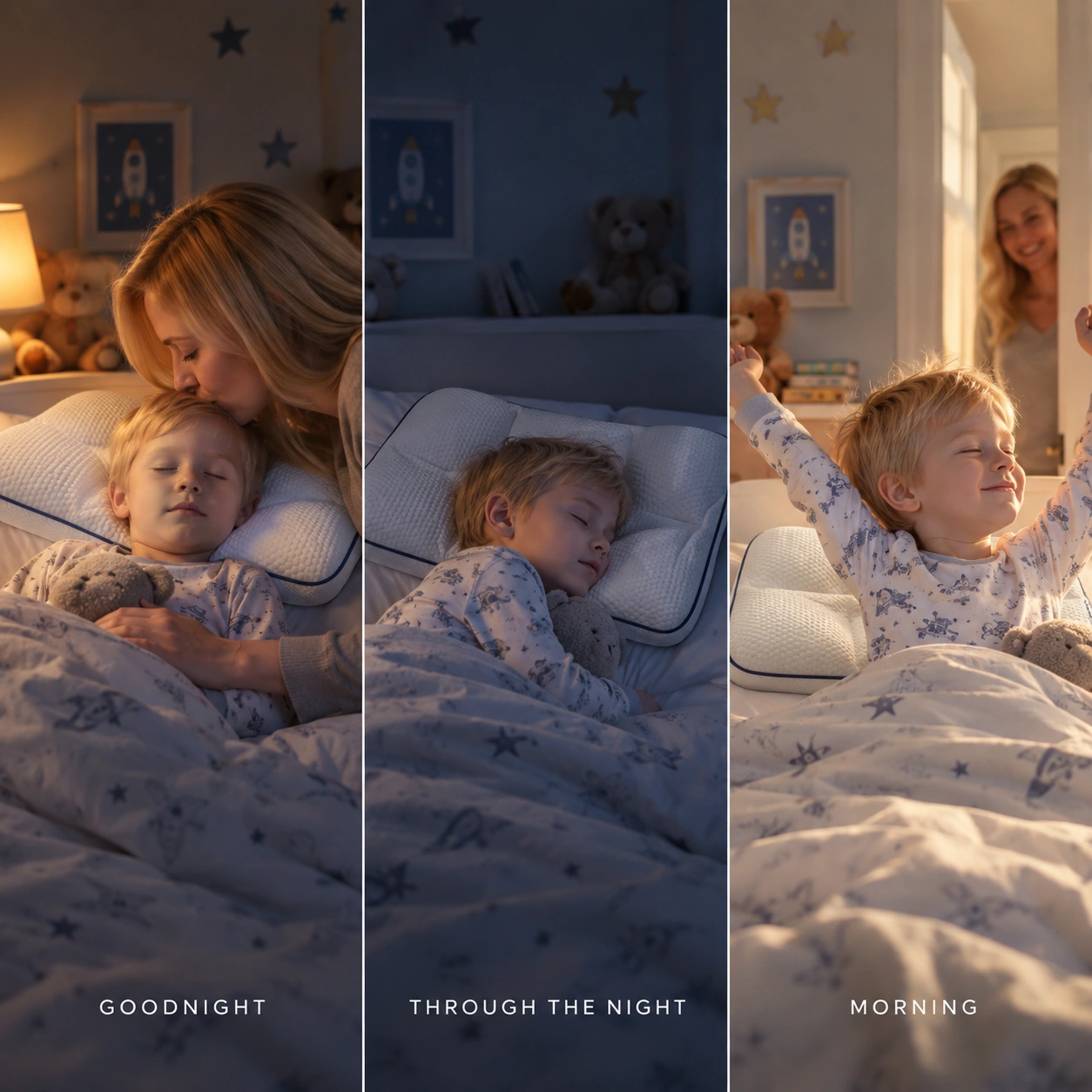
You put them to bed.
Kiss them goodnight.
Turn off the light.
Close the door.
And the next time you see them...
IT’S MORNING.
That's the outcome.
Not contours.
Not recessed centers.
Not pillow geometry.
SLEEP.
For them.
And for you.
YOU’VE ALREADY WORKED ON BEFORE.
YOU’VE ALREADY DEALT WITH AFTER.
NOW ADDRESS THE HOURS IN BETWEEN.
Tonight, they're going to put their head on a pillow again.
They're going to move.
They're going to reposition.
They're going to spend hours with it underneath them.
So ask yourself:
WAS THEIR PILLOW ACTUALLY DESIGNED AROUND THE CHILD SLEEPING ON IT?
UKOLA was.
And as a pediatrician, it’s the pillow I recommend to parents and patients all the time when they ask me what I’d choose for their child.
There is one thing I warn parents about:
UKOLA REGULARLY RUNS OUT OF STOCK.
So if it’s available when you check, I recommend getting it while it’s still available rather than coming back later and finding it sold out again.
Availability can change as inventory sells through.